Super can feel like “set and forget”, but understanding how superannuation is calculated affects your take-home pay, your employer obligations, and your retirement balance over decades. For employees, the starting point is the Superannuation Guarantee (SG) rate and your Ordinary Time Earnings (OTE). For business owners, the same rules determine what you must pay, when you must pay it, and what happens if you miss.
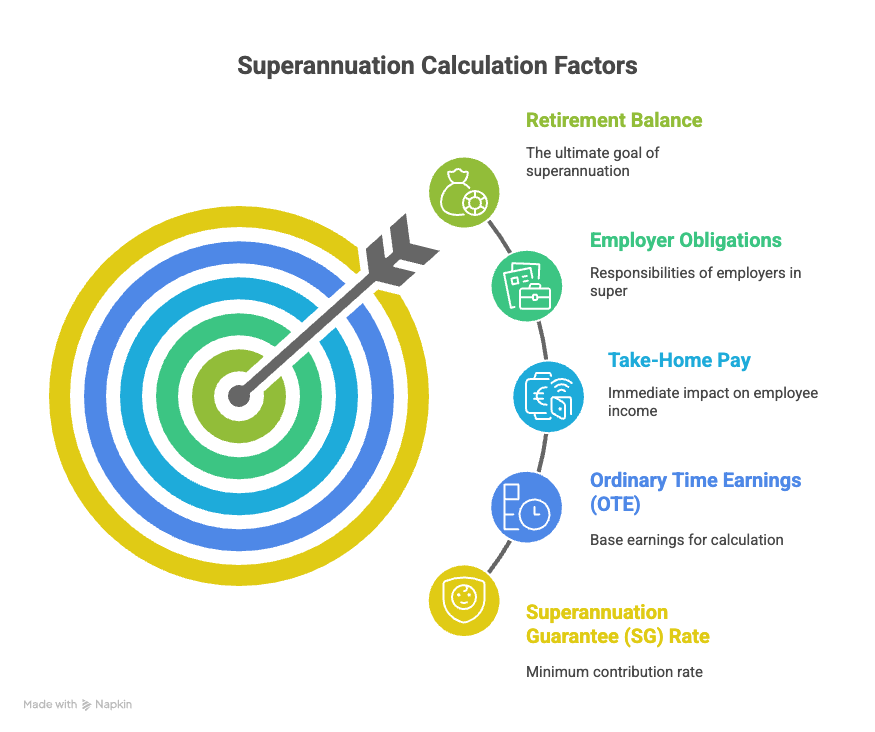
This guide explains how superannuation is calculated in plain terms, with practical checks you can do on your payslip.
Step 1: Start with the SG rate and the right earnings base
For most employees, employers must contribute a minimum percentage of OTE. The SG rate is set by law and published by the Australian Taxation Office (ATO) each year (see ATO: Super guarantee rate). The key is not just the percentage—it’s making sure the earnings base is correct.
OTE broadly covers what you earn for ordinary hours of work. It usually includes base salary and wages and may include some allowances and bonuses, depending on how they relate to ordinary hours. OTE often excludes overtime, but the detail matters. The ATO’s examples are useful when you’re sense-checking what should be counted (see ATO: How much super to pay).
Step 2: Work out “superable” pay for the period
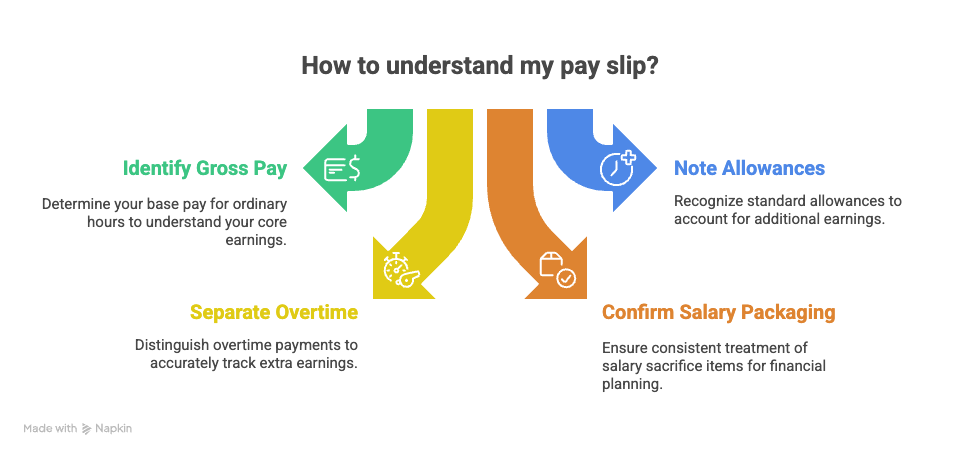
To calculate SG, you need the OTE for the pay period (weekly, fortnightly or monthly). A simple way to check your payslip:
- Identify your gross pay for ordinary hours (your base pay)
- Note any standard allowances tied to ordinary hours (for example, shift allowances)
- Separate true overtime payments if they’re shown distinctly
- Confirm salary packaging or sacrifice items are treated consistently
Common mistakes are practical rather than “tax technical”: overtime blended into base pay, allowances coded inconsistently, or payroll settings not updated when roles change. Those issues can lead to underpaid super and messy back-pay calculations.
Step 3: Apply the SG rate to OTE
Once you have OTE for the pay period, multiply it by the SG rate. If OTE is $2,000 for a fortnight and the SG rate is 12%, the SG contribution is $240 for that period.
That’s the core formula behind how superannuation is calculated. But the “edges” matter too: timing, reporting, and getting the right data into payroll.
Step 4: Understand the timing rules (and why they’re changing)
Many employers have historically paid SG quarterly. From 1 July 2026, “Payday Super” is due to shift SG to being paid with salary and wages, so contributions reach the employee’s super fund within a short window after payday (see ATO: Payday superannuation and Fair Work: Payday super changes).
For employees, more frequent payments improve visibility and compounding. For employers, it means payroll processes need to be cleaner: correct OTE mapping, fewer manual adjustments, and good record-keeping.
Step 5: Keep an eye on contribution categories and limits
SG is an employer contribution and generally counts towards a member’s concessional contribution cap. Many people won’t hit the cap from SG alone, but higher-income earners, people with multiple employers, or people salary sacrificing can. If contributions exceed caps, additional tax and admin work can follow.
A quick payslip checklist you can run in five minutes
If you’re trying to confirm your super is being calculated correctly, start here:
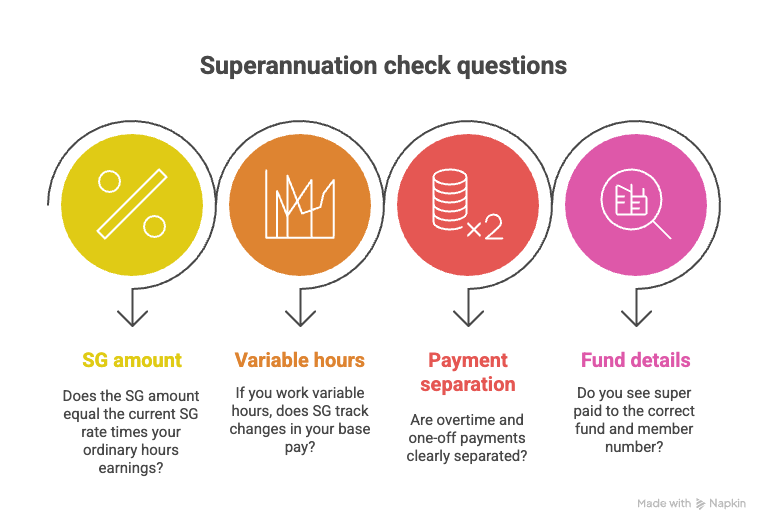
- Does the SG amount equal the current SG rate times your ordinary hours earnings?
- If you work variable hours, does SG track changes in your base pay?
- Are overtime and one-off payments clearly separated?
- Do you see super paid to the correct fund and member number?
If anything looks off, raise it early. Underpayments can be fixed, but the longer they run, the more complicated and costly remediation becomes.
How a BAS and payroll rhythm supports correct SG
For small businesses, super is not an isolated obligation. It sits alongside pay runs, Single Touch Payroll (STP) reporting, BAS (Business Activity Statement) preparation, and cash flow planning. When the monthly rhythm is consistent, super errors are easier to spot before they become “end of year” surprises.
If you’re building your internal process, you may also find our BAS guidance helpful, because the discipline is similar: reconcile early, review exceptions, lodge on time. See BAS Lodgement Simplified and Online BAS Lodgement: 5 steps.
When to get help
Consider advice if you have awards with higher super rates, complex pay structures (commissions or packaged salaries), related-party employees, or a history of missed payments. Getting SG wrong can be expensive—especially once Superannuation Guarantee Charge and penalties apply. TTS & Associates is well versed in superannuation and how it can be applied to your situation.