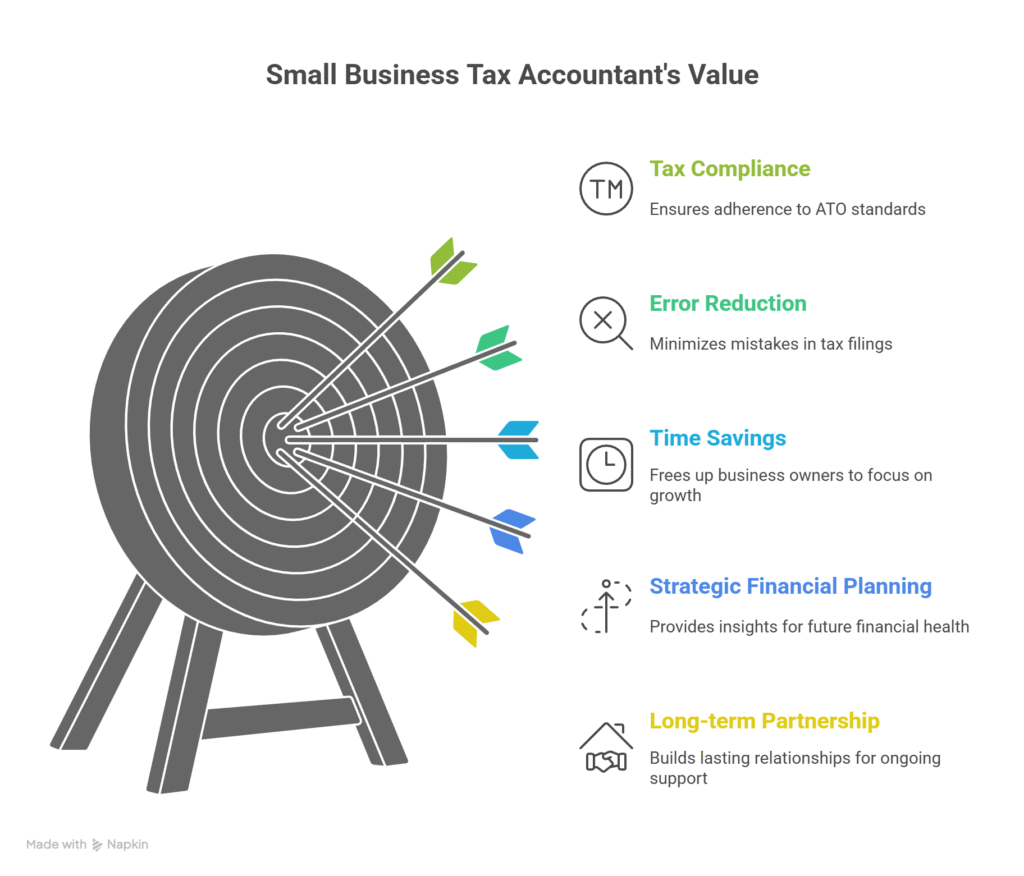
A small business tax accountant is more than a form filler. For sole traders, companies and trusts alike, the right partner designs a system that meets ATO standards, reduces errors, and frees you to focus on customers. Here’s how to get value from the relationship in year one and beyond.
Start with foundations, not forms
Ask how they’ll set up your chart of accounts, invoicing and document retention so everything maps to BAS and tax labels. Good systems make audits and reviews routine, not stressful. The ATO sets clear expectations on record-keeping—use their guidance as your benchmark (see Record-keeping for business). (Australian Taxation Office)
Integrate BAS, payroll and tax
Your small business tax accountant should schedule BAS lodgements, PAYG withholding, superannuation and year-end returns as a single calendar. This reduces missed dates and late-lodgement penalties. If you lodge through an agent, you may access program extensions; your accountant will advise how that works in practice.
Know your concessions
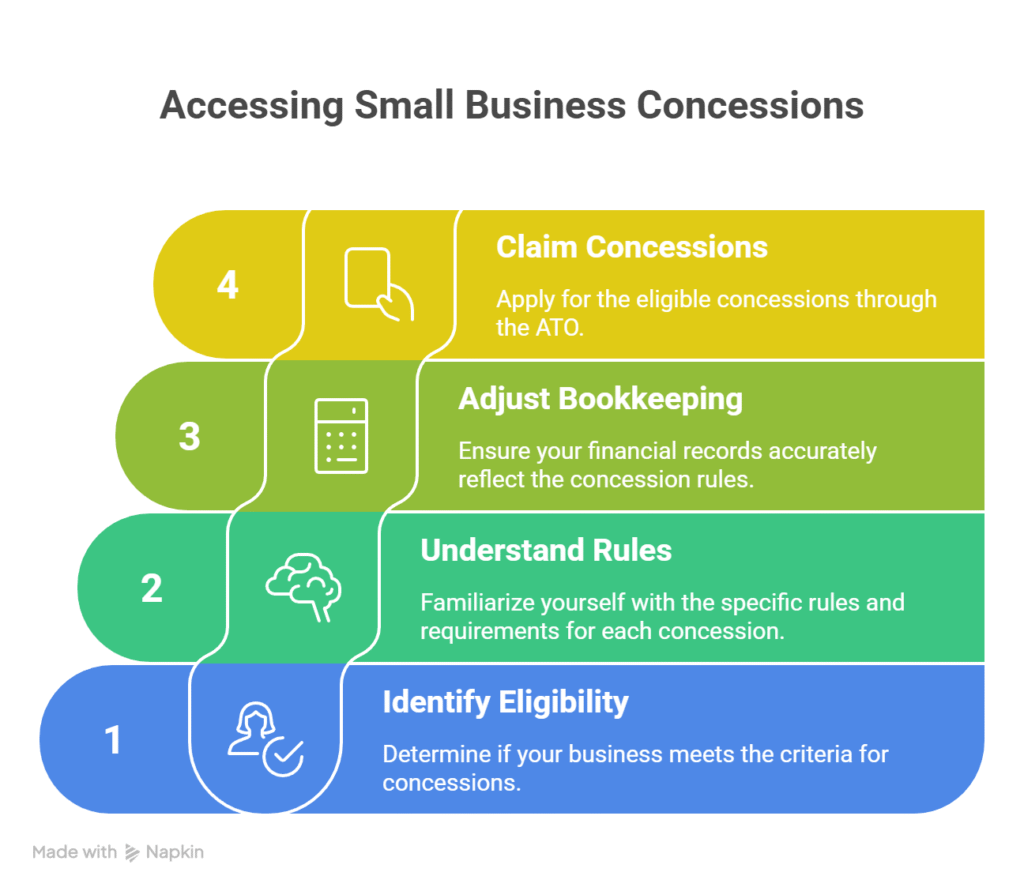
Small businesses can access a range of concessions—instant asset write-off thresholds (when available), simplified trading-stock rules, and the powerful small business CGT concessions for active assets. Map eligibility early so bookkeeping reflects the rules (see ATO: Concessions for eligible businesses and Small business CGT concessions). (Australian Taxation Office)
Practical monthly rhythm
- Reconcile bank feeds; attach invoices for each expense.
- Review GST coding outliers before quarter-end.
- Check payroll totals against Single Touch Payroll reports.
- Set aside cash for net GST, PAYG withholding and instalments.
Our step-by-step posts—BAS Lodgement Simplified and Quarterly BAS Due Dates—show the flow that keeps BAS and tax aligned.
When to level up
Consider a small business tax accountant with advisory capability when:
- you’re hiring staff or moving to payroll software;
- you’re adding a second location or entity;
- you’re planning a business sale and need CGT modelling.
Evidence beats estimates
The ATO increasingly uses data-matching across banks, payroll and property. Solid records—contracts, asset registers, stock counts, logbooks—are your best defence and often unlock deductions you might otherwise skip (see Record-keeping help for small businesses). (Australian Taxation Office)
Choosing the right fit
Look for a practice that’s TPB-registered, cloud-literate and proactive about regulatory changes. Ask for templates: onboarding checklists, BAS review steps, and a year-end pack. A strong small business tax accountant will also brief you on upcoming changes so you’re ready, not reacting.
With the right small business tax accountant, compliance becomes a repeatable habit, not a scramble—freeing time and headspace to grow your business while staying aligned with ATO rules and concessions. (Australian Taxation Office)
General information only – seek professional advice before acting.