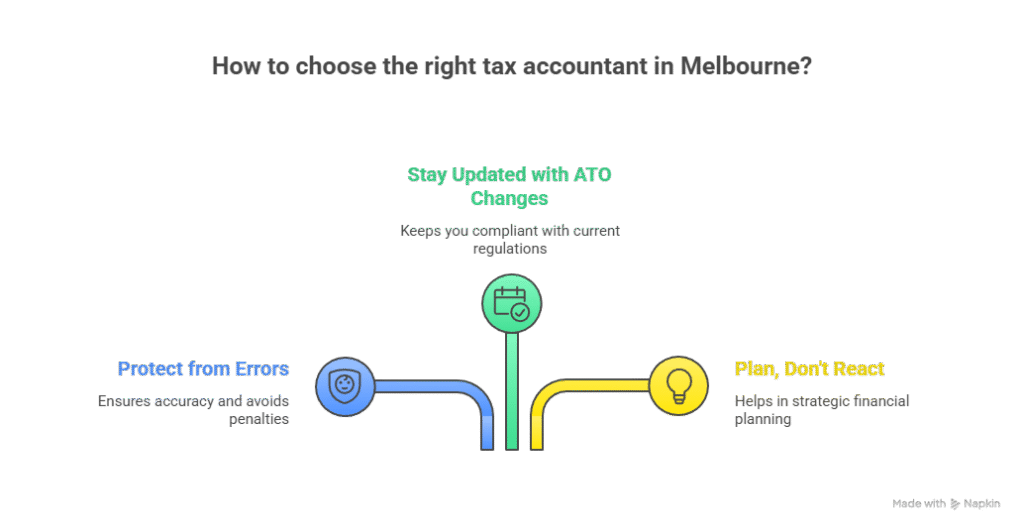
Choosing a tax accountant Melbourne is about more than lodging on time. The right practitioner protects you from errors, keeps pace with ATO changes, and helps you plan—not just react. Here’s a practical way to vet options and set up a smooth, compliant workflow.
Check registration first
Anyone who prepares returns or provides tax advice for a fee must be registered with the Tax Practitioners Board (TPB). Search the TPB Register and confirm status, conditions and expiry before you engage (see TPB: Finding and using a tax practitioner and TPB Register). (Tax Practitioners Board)
What good looks like
A strong tax accountant Melbourne will:
- Map your lodgement program and due dates for the year.
- Build a paper-trail that survives ATO review.
- Proactively flag rate/bracket changes and deductions relevant to your profile.
- Use secure digital tools for signatures, document exchange and pre-fill.
Ask about their playbook
Discuss how they handle:
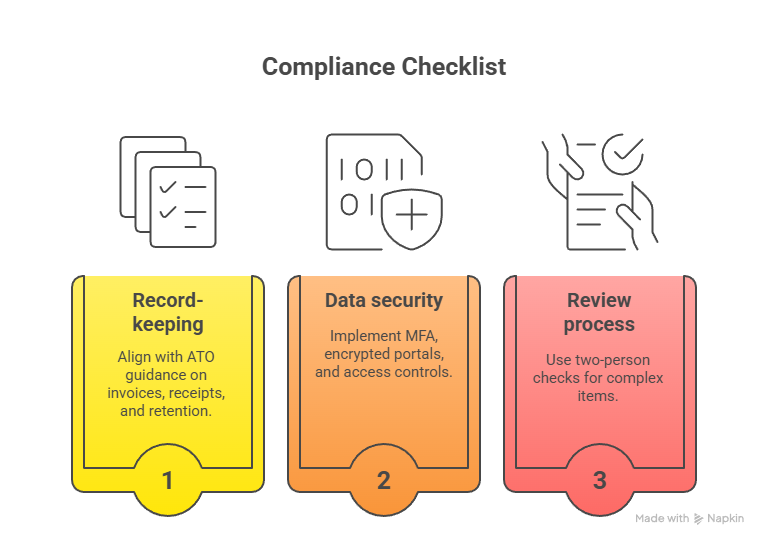
- Record-keeping standards—do they align with ATO guidance on invoices, receipts and retention? (see ATO: Record-keeping for business). (Australian Taxation Office)
- Data security—MFA, encrypted portals, and access controls.
- Review process—two-person checks for complex items like CGT or rental schedules.
Fees and scope—make it explicit
Agree on what’s included (returns, BAS, ASIC help, payroll, CGT schedules), turnaround times, and how queries are billed. Ask for examples of ATO correspondence they’ll handle under the engagement vs items billed separately.
Signs of real value
- They turn ATO changes into checklists for you—like the 2024–25 individual tax rate updates and how they affect withholding.
- They integrate your BAS and year-end workflows, reducing double handling.
- They provide scenario modelling before big decisions—property sales, starting a business, or going contractor.
Your setup starter kit
- Create a secure shared folder with ID, prior returns, PAYG summaries, rental files.
- Adopt a digital record-keeping system aligned to ATO rules (see Digital record-keeping). (Australian Taxation Office)
- Use a monthly checklist to keep deductions and receipts current.
When things get complex
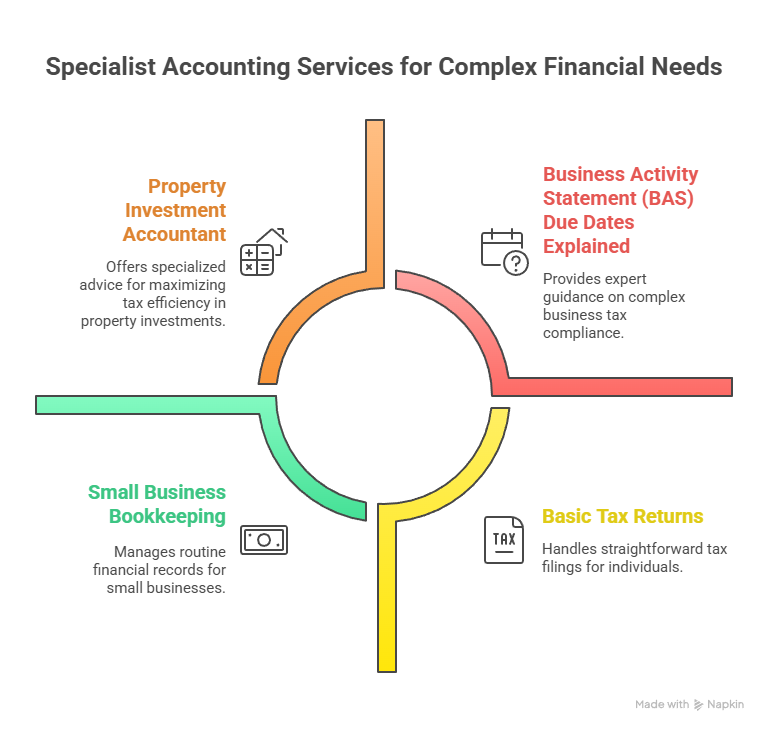
If you have investment property, a business, or CGT events, consider a firm with specialist arms. Our guides—Property Investment Accountant and Business Activity Statement Due Dates Explained—show the sort of processes a good practice will set up for you.
Why local still matters
A local tax accountant Melbourne knows Victorian payroll tax thresholds, land tax nuances, and state rebates. Combined with TPB registration and ATO-aligned systems, that local context can make compliance smoother.
Do your due diligence, agree on scope, and set shared routines. With the right tax accountant Melbourne, you’ll lodge accurately, plan ahead, and avoid ATO surprises (TPB Register guidance). (Tax Practitioners Board)
General information only – seek professional advice before acting.